The Story
of Your Water
Before water reaches your glass, it has already traveled through a remarkable system of natural sources, reservoirs, groundwater, treatment facilities, distribution infrastructure and household plumbing.
Turn on the faucet and water appears instantly. But the story behind that glass begins long before it reaches your home.

Water doesn't begin at the faucet.
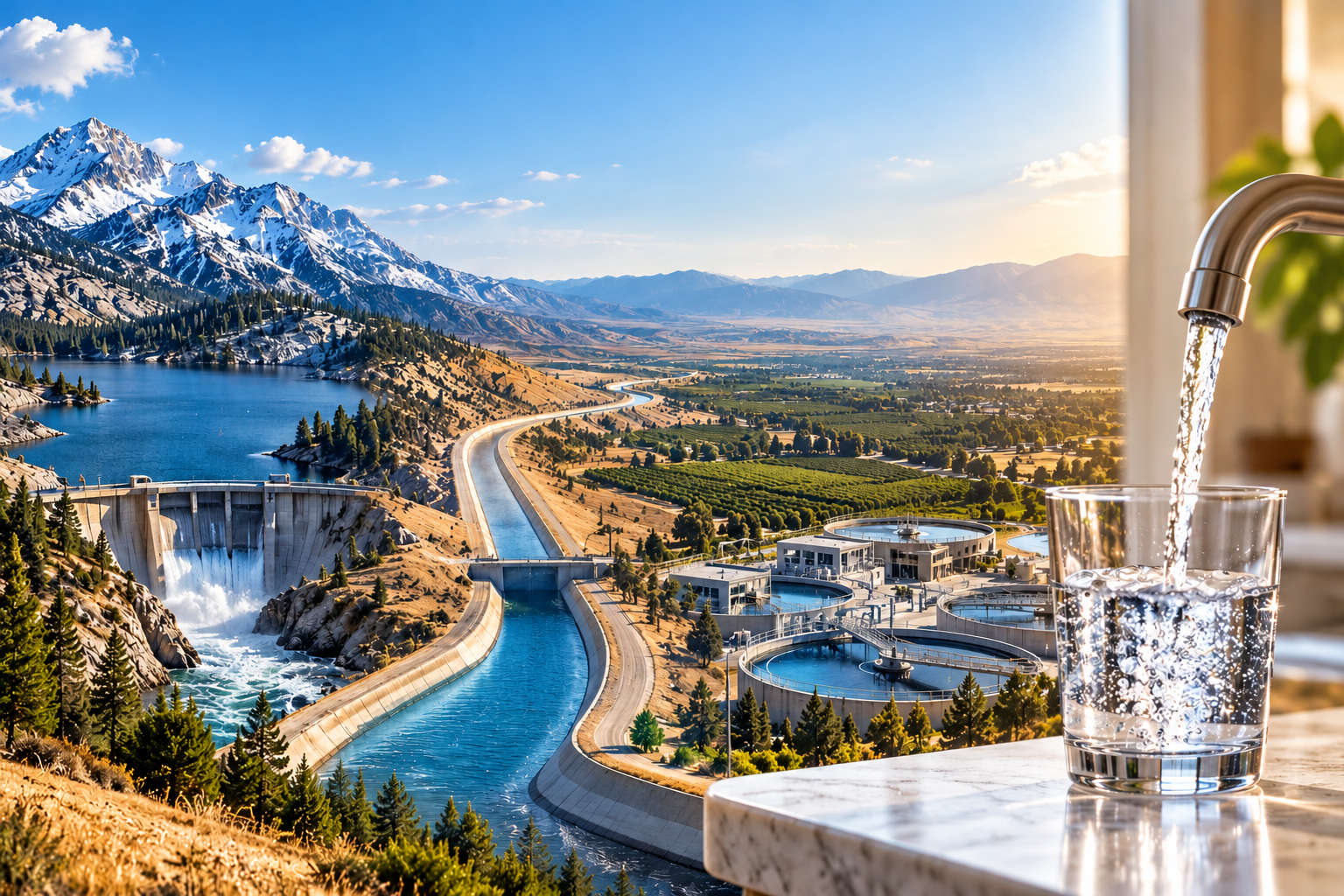
California's water comes from a combination of surface water and groundwater. Rain and mountain snow feed rivers and reservoirs, while enormous quantities of water are also stored underground in aquifers.
A vast network of reservoirs, canals, aqueducts, pumping facilities and local water systems moves that water to farms, communities and cities across the state.
In a typical year, groundwater supplies about 40% of California's total water supply. During dry years, that contribution can rise to 60% or more.

Water can pick things up along its journey.
Natural water is not simply pure H₂O. As it moves through soil, rock, rivers and underground formations, water can dissolve minerals and encounter naturally occurring substances.
Human activity can also affect source water. California regulators identify potential sources that include agriculture, septic systems, industrial activity and other land uses. For example, nitrate in groundwater can be associated with fertilizer use, animal operations and septic systems.
California evaluates both surface-water and groundwater drinking water sources for their vulnerability to potential contamination.

Source water becomes drinking water.
Public water systems treat and monitor water before it is delivered to customers. The exact treatment depends on the source and the conditions of the water.
California establishes Maximum Contaminant Levels for regulated drinking-water contaminants. Water systems sample and test their water to determine whether it complies with applicable standards.
A regulated contaminant may be detected at a concentration below its applicable legal limit. “Detected” and “in violation” are therefore not the same thing.
Where does Bakersfield's water come from?
The City of Bakersfield's Domestic Water System uses a combination of local groundwater, Kern River surface water and treated water purchased from the Kern County Water Agency.
Groundwater
The system reports 57 active wells producing local groundwater, with treatment where necessary to improve taste and odor.
Kern River
Surface water from the Kern River is treated using advanced membrane filtration before entering the drinking-water system.
Purchased Treated Water
The system also receives treated water purchased from the Kern County Water Agency.
In 2025, the City of Bakersfield system reported 54,325 tests on 9,190 water samples for 198 constituents and stated that it met every primary and secondary federal and state water-quality standard that year.
Legal limit vs. health-based guideline.
This distinction is important when reading water-quality information. A regulatory limit and an independent health-based guideline are not necessarily the same number.
Legal Limit
California and federal drinking-water regulations establish enforceable standards for regulated contaminants. Public water systems are required to comply with applicable standards.
Health Guideline
EWG also compares utility test results with health-based benchmarks. These EWG health guidelines may be much lower than regulatory limits and are not themselves enforceable drinking-water standards.
Two statements can both be true.
The official Bakersfield water-quality report can state that the system met applicable drinking-water standards, while EWG can simultaneously report detections above its own lower health-based benchmarks.
The difference comes from the benchmark being used. That is why understanding the source of a water-quality number matters.
Clear water can still contain dissolved substances.
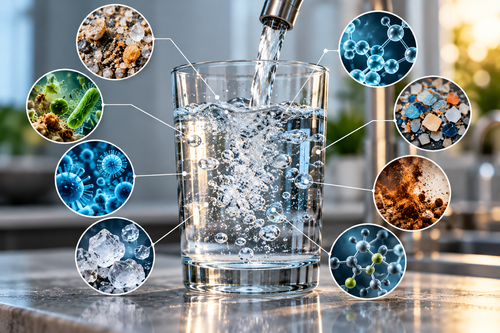
Many constituents in water are invisible to the eye. Testing — not appearance alone — tells us what is present and at what concentration.
Arsenic
A naturally occurring element that can enter groundwater through rock and soil. California regulates arsenic in drinking water.
Nitrate
Can enter groundwater from sources including fertilizer, animal operations and septic systems. It is regulated in drinking water.
Treatment Byproducts
Compounds such as haloacetic acids and trihalomethanes can form when disinfectants react with naturally occurring material in water.
PFAS
A large family of synthetic chemicals receiving increased regulatory attention and monitoring in drinking-water systems.
Then the water enters your home's plumbing.
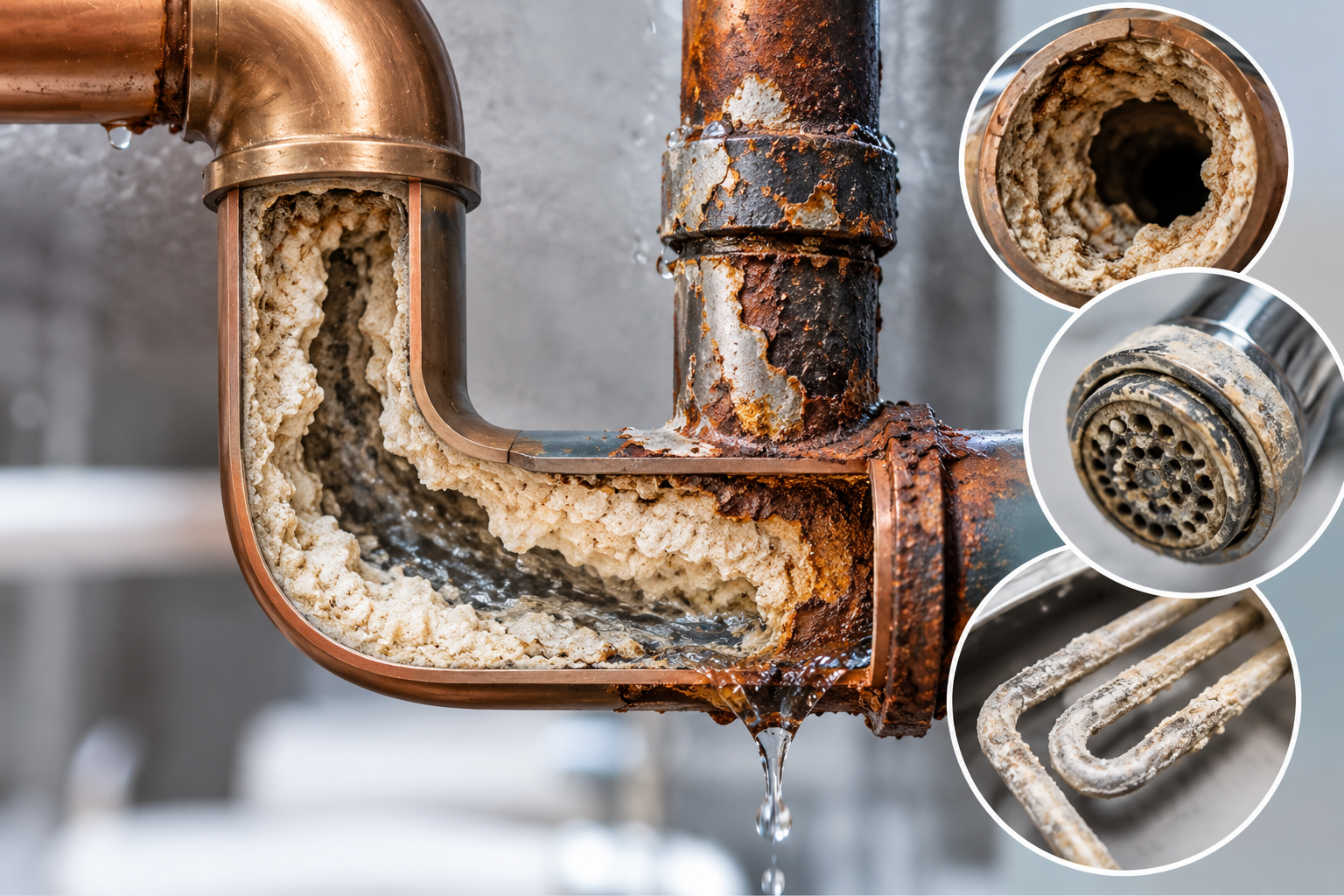
Once water reaches a property, it travels through the home's plumbing, fixtures and appliances before reaching the glass, shower or washing machine.
Hardness minerals can contribute to scale on fixtures and water-using equipment. Plumbing materials and corrosion can also affect water quality under certain conditions.
Water softening, activated carbon, reverse osmosis, sediment filtration and UV treatment perform different jobs. There is no single treatment technology that addresses every possible water-quality concern.
Know your water before deciding how to treat it.
The presence of a constituent does not automatically mean that drinking water violates a safety standard, and water that complies with regulatory standards does not necessarily contain zero detectable constituents.
Understanding your source, your local water report, your home's conditions and the specific concern you want to address is the first step toward choosing an appropriate treatment system.
Now let's learn about yours.
Schedule a free in-home water test with Gentle Water Filtration. We'll start with your water, discuss what you are experiencing, and help you understand the treatment options available for your home.
SCHEDULE YOUR FREE WATER TEST (661) 563-0409